
 Back
Back

Over the past two decades, nearly all religions in the U.S. have seen a decline in service attendance rates, except for Judaism, which has seen a 7% increase in regular attendance since 2000. To make the most of this revitalized interest in Judaism among younger generations, synagogues must meet their newest members where they are by engaging them online.
Digital engagement means more than just hosting services online. By embracing modern technology, your synagogue can connect with members across platforms and revolutionize its day-to-day administrative work.

To help your synagogue enhance its approach, this masterclass will review best practices for leveraging technology to engage synagogue members. But first, assess your synagogue’s engagement strategy with our custom quiz to understand where your organization currently stands.
Check Your Synagogue Engagement Strategy
7 Digital Synagogue Engagement Strategies
1. Maintain an active membership database.
To engage your synagogue’s members, you need to know who they are. Even small organizations can struggle to connect with each member without proper records, meaning every synagogue can benefit from maintaining a membership database.
If your synagogue is low-tech, your membership database might be a spreadsheet. While this approach might be useful for listing out your members, synagogues looking to track relationships, individualize their engagement approach, and identify behavioral trends among congregants need a more sophisticated solution.
Research membership database tools to find a platform that allows you to:
- Create specialized member profiles. All membership software allows organizations to create individual profiles for members, but only platforms tailored to synagogues will have the unique information fields you’ll need to engage members. Look for a system that lets you track members’ names, addresses, tribes, Aliyah eligibility, family members, birthdays, yahrzeits, schools, and more. Plus, some membership databases offer specialized features for synagogues, like a Gabbaim integration that lets you view upcoming yahrzeits and birthdays.
- Manage payments. Keep track of which members have paid their dues, how much they need to pay, and if they’ve missed any recent payments. With invoicing and batch billing tools, you can automatically reach out to members about payments and ensure that no dues fees are ever missed.
- Maintain a member directory. A membership database is useful for your synagogue’s administrative staff and your members. Rather than relying on paper membership lists, users can browse your congregants’ profiles through a secure online platform. This way, both your staff and congregants can easily make connections and ensure no one is forgotten.
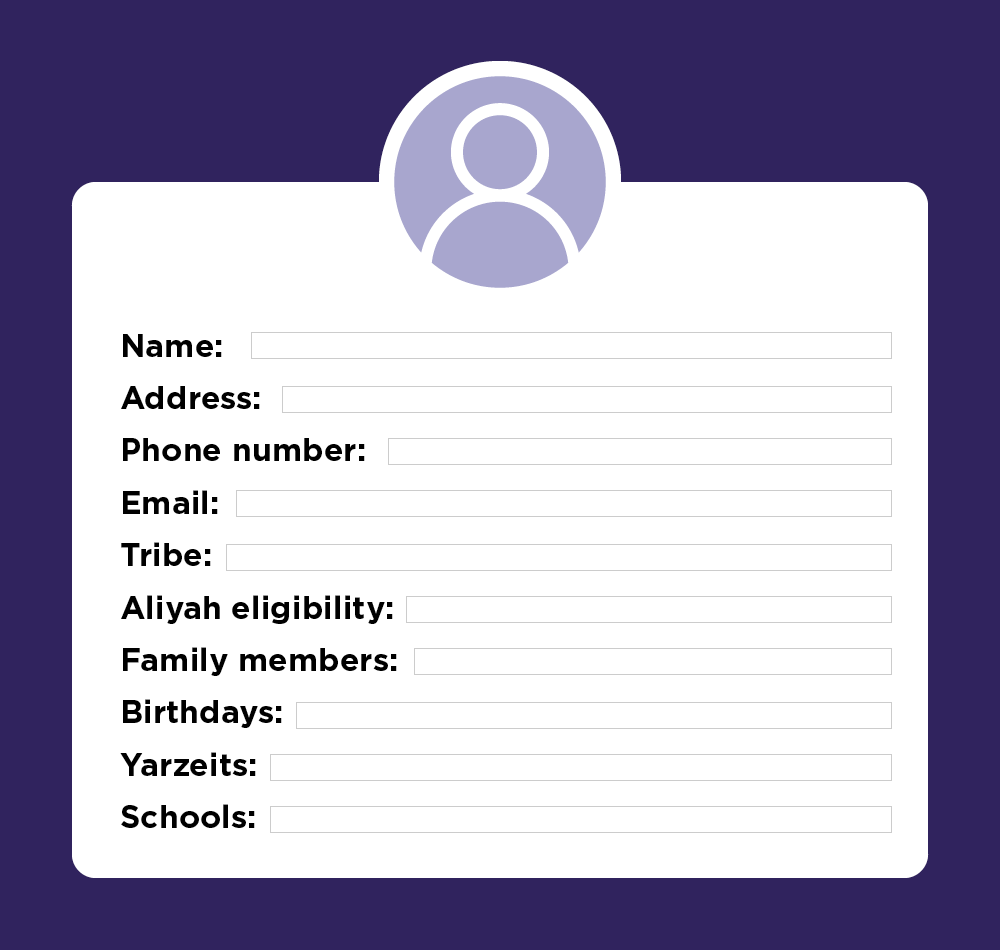
To ensure your membership database is useful, prioritize updating and maintaining it. You can improve your synagogue’s data hygiene by conducting regular audits to remove outdated information, merge duplicate profiles, and fill in missing details. Additionally, consider allowing members to update their own profiles. This can alleviate some of the administrative burden from your staff and enable members to update their own details as soon as they change.
2. Create an online activities calendar.
The easier engagement opportunities are to discover and sign up for, the more your members will participate in them. Promote the many activities that take place at your synagogue with an online calendar.
A few best practices for maintaining an online activities calendar include:
- Make your calendar easily accessible. Display your calendar prominently on your website so members can view your synagogue’s upcoming events at their leisure. For major events, create dedicated event pages that your calendar links out to, such as a page detailing event logistics for Yom Kippur. Along with events, you might also include other dates, like the deadline for registering students for religious school.
- Allow members to submit events. When members can see your whole calendar, they can easily select dates for their own events. For example, parents scheduling their child’s b’nai mitzvah can pick a date a year in advance to avoid scrambling and prevent double-booking.
- Display local Jewish halachic times (zmanim). Explore website plugins made just for synagogues, like a zmanim widget that lets you add custom times based on your congregation’s specific location. Look for a plugin that calculates the most prominent Jewish halachic times, like Alos Hashachar (Dawn), Earliest Tallis & Tefillin, Netz (Sunrise), Latest Shema, Zman Tefillah, Chatzos (Midday), Mincha Gedola, Mincha Ketana, Plag HaMincha, Shkiah (Sunset), and Tzais Hakochovim.
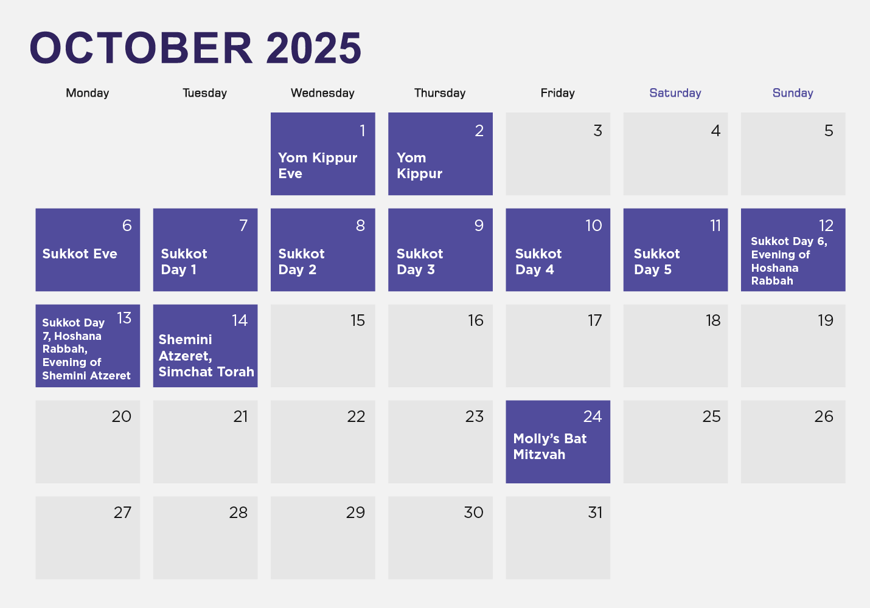
Maintaining an online calendar can also improve your staff’s organization, as you’ll have a readily available universal source of truth for upcoming events and activities that everyone at your synagogue can refer to.
3. Refine your email and SMS outreach strategies.
How do you get in touch with your synagogue’s community? Do you mail letters, call them on the phone, or simply make announcements at the end of services?
To improve your communication strategy, your synagogue should start engaging with members through email and text message if you don’t already. By taking a digital approach to communication, you can more easily reach all your members and encourage two-way communication.
While you might already use email for payment reminders, your synagogue’s newsletter, and event promotion, few synagogues make effective use of SMS communication. A few synagogue-specific use cases for text messages include:
- Inform event attendees about logistical changes, such as if the venue moves
- Text the minyan list to help make a minyan
- Remind volunteers about upcoming shifts
- Send outstanding balance reminders with links to pay
- Send "Happy Birthday" and other engagement messages
- Message reminders to students who are enrolled in your Hebrew school class
Research messaging tools that allow you to create and send bulk messages. Many platforms help boost engagement by allowing users to create a message template and then automatically populate it with each recipient’s personal details, like their name.
4. Experiment with online services
Some synagogues have found success in engaging a wider audience by taking their services online. In 2020, many synagogues adapted to virtual and hybrid services out of necessity, but even as synagogues returned to in-person services, they had still made a major leap forward in increasing online accessibility.
Tablet Magazine reports multiple examples of how online services dramatically widened possible synagogue attendances during this time period:
“Central Synagogue, a large Reform congregation in New York City, confirmed that on Rosh Hashanah 2021, total livestream viewership on all platforms was over 250,000, while Yom Kippur drew some 600,000-plus. Rabbi Nancy Tunick at Temple B’nai Israel in Florence, Alabama, a small unaffiliated congregation of 40 households, reported 100-200 people watch every livestreamed service, including some from as far away as England and Mexico who have become dues-paying congregants. At Congregation Shearith Israel, a midsize Conservative synagogue in Atlanta, Rabbi Ari Kaiman described recent in-person attendance at Shabbat morning services without a bar/bat mitzvah as 50-80, with up to another 100 on the livestream and archived platforms.”
Essentially, synagogues with online service options can expand their congregations to include individuals who live outside of their immediate communities. Thanks to these additional service attendees, synagogues across the world were able to increase dues revenue, connect with new members, and keep their communities engaged even without in-person services.
While 2020 has long since passed, some synagogues may still find success in engaging members through hybrid services. A few ways you can conduct online services include:
- Investing in livestreaming software. Your livestream software doesn’t need to be highly sophisticated. As long as you have clear audio and video capabilities, you should be able to connect with your congregation online. For online-only meetings, free tools like Zoom should work fine.
- Establishing a “non-resident” member tier. If your synagogue has or is interested in attracting non-local members, consider creating a unique membership tier just for them. This tier would have reduced fees and allow members to attend online services.
- Providing interaction opportunities. To ensure your online services are as valuable as your in-person ones, plan how you’ll provide equivalent interaction opportunities. For example, during a Yizkor memorial service, you might invite all online attendees to take turns unmuting and saying the names of their deceased loved ones.
5. Encourage socialization.
While online tools provide more communication methods than ever before, they can also make people feel disconnected. As such, your synagogue’s community is a powerful opportunity for socialization.
Members who have friends in your congregation are more likely to continue attending services and engage with your other events. A few ways to provide social opportunities include:
- Create small groups/cohorts. If you have a large congregation, reaching out to new people might be intimidating. Encourage bonding by organizing members into groups based on shared traits, such as age, the year they joined, or where they live.
- Host networking events. Your community can be a game-changing resource for some members, helping them find opportunities to further their careers, education, or other goals. Members who benefit from networking opportunities will feel grateful to your synagogue and potentially encourage others to join to access the same opportunities.
- Encourage members to host their own events. This reminds them that your staff doesn't need to plan every social gathering and helps shift the culture from relying on the synagogue to one where the community actively lends its time and skills.
Digital engagement and in-person engagement should work in tandem. Spread the word about get-togethers and gather event feedback via email, then host events that promote face-to-face interaction. Take pictures and videos of these events so your community remembers the fun experiences they had, and use these visuals to promote your next gathering.
6. Improve transparency.
Sometimes, behind-the-scenes decision-making processes can seem opaque or even secretive to members. If members don’t understand why your synagogue makes certain decisions or feel like their voices aren’t being heard, they might disengage from your organization.
Avoid this scenario by adopting transparent practices, like:
- Keeping your community updated. While you don’t need to share the minute details of day-to-day activities with your congregation, keep them in the loop when significant developments do occur. For instance, when making a major decision that will impact your community, ensure they understand the reasons behind your course of action.
- Enabling two-way communication. Your community members are invested in your synagogue and likely have thoughts on how you can improve operations. Invite them to share their feedback online through surveys or with your entire congregation during open mics and townhalls.
- Performing audits. Audits ensure your synagogue’s finances, data, and other practices are in order and operating ethically. Additionally, audits help you catch errors and inefficiencies, helping your organization run more smoothly. By passing audits and presenting reports of your findings, you can verify to your community that your synagogue is putting their donations and membership dues to good use.
Your email newsletter is a go-to digital channel for providing these updates, and unlike an announcement after a service, members can pull up an email for reference later.
7. Create youth-centered activities.
If your synagogue is concerned about future membership rates, start investing in the young members you do have. You can engage families with children, teenagers, and young adults by:
- Making b’nai mitzvah planning easy. A b’nai mitzvah is a hugely important event in a young Jewish person’s life, and the more you can help families plan for their children’s bat and bar mitzvahs, the more they’ll engage with your synagogue. Provide families with a tutor to help study their b’nai mitzvah curriculum, and consider leveraging a communication platform that helps families stay in touch with tutors and your synagogue during the preparation process.
- Cultivating age-appropriate activities. Outside of Hebrew school, consider creating kid-friendly religious experiences for families with children. Cultivating an early interest in Judaism can inspire lifelong memberships. These activities might include guided online lessons that they can complete with a parent or in-person youth activities hosted by parent volunteers.
- Meet young generations where they are. Millennials, Gen Z, and most recently, Gen Alpha often turn to online opportunities and resources first. Ensure that when these members visit your synagogue’s website, they can find all the information they need to engage with your organization.
Remember that investments in digital engagement opportunities are investments in your synagogue’s future. By implementing online experiences that address new and young members’ needs, you can secure their support, resulting in a new generation of members for your synagogue.
Conclusion
Many synagogues are hesitant to embrace technology, worried that tools will overcomplicate processes, be too hard to learn, or be too expensive for their organization. However, digital engagement opportunities and experiences backed by technology can bring your community together, provide access to new audiences, and actually make your synagogue easier to run.
To start improving your synagogue’s engagement strategy, assess your current approach by taking our quiz! Using your score as a starting point, research platforms that will elevate your synagogue’s digital toolkit to provide you with the resources you need to connect with your community.