 Back
Back
B’nai Mitzvahs are important, memorable events in the lives of young Jewish people and their families. However, they can also be stressful! Your synagogue should help guide each B’nai Mitzvah cohort through a clear timeline, from orientation to the ceremony, to make the process easier for families.
Below is a seven-step framework distilled from common practices, starting with a spring kickoff for the next year’s B’nai Mitzvah cohort and ending with the milestone ceremony. For each step, we’ll explain why it matters and what activities it typically involves, enabling program managers to plan ahead with confidence.
B'nai Mitzvah Framework Checklist
Step 1: Orientation and Cohort Onboarding
The preparation journey begins with a spring orientation for families who will celebrate a B’nai Mitzvah the following year. This kickoff meeting should go over the timeline and set expectations for the coming months. Additionally, this is an opportunity for families to meet key staff who will help them along the way, like rabbis, cantors, and tutors.
If your synagogue has any resources—such as a welcome packet or handbook—this is a good opportunity to distribute them and answer questions. For example, if your synagogue leverages an online B’nai Mitzvah preparation platform, you might introduce it to parents and provide directions for how to log in, register, or make an account.
Of course, every synagogue is different and may have different orientation practices. Larger congregations might hold parent orientations and assign B’nai Mitzvah dates up to three years in advance.
No matter your exact practices, the goal should be the same: ensuring everyone is on the same page early, reducing anxiety, and clarifying the road ahead.
Step 2: Family Education Workshops and Community Engagement
To encourage community engagement and continue preparing students, many synagogues provide a series of family learning experiences in the months leading up to the B’nai Mitzvah.
Usually, these gatherings take the form of workshops, classes, or retreats designed for both students and parents. For example, one synagogue’s program includes a kickoff Shabbat dinner for sixth-grade families, followed by three Sunday workshops and even a retreat for the cohort.
Through these sessions, families will come together to:
- Study Jewish values
- Learn worship practices
- Explore B’nai Mitzvah themes
Additionally, congregations should emphasize participation in synagogue life. Many organizations require or strongly encourage families to attend Shabbat services regularly for at least a year. Doing so helps students learn their synagogue service’s rhythms, internalize the flow of prayers and rituals, and become more comfortable participating in their community.
Step 3: Mitzvah Project
An essential component of many B’nai Mitzvahs is the Mitzvah Project—a social action or community service project undertaken by the student. These projects are meant to instill responsibility and demonstrate the student’s Jewish values in a tangible form.
Synagogues usually introduce this about a year out from the B’nai Mitzvah to provide plenty of time for students to come up with a project and complete it. Projects usually take the form of charitable volunteer efforts. A few examples of projects include:
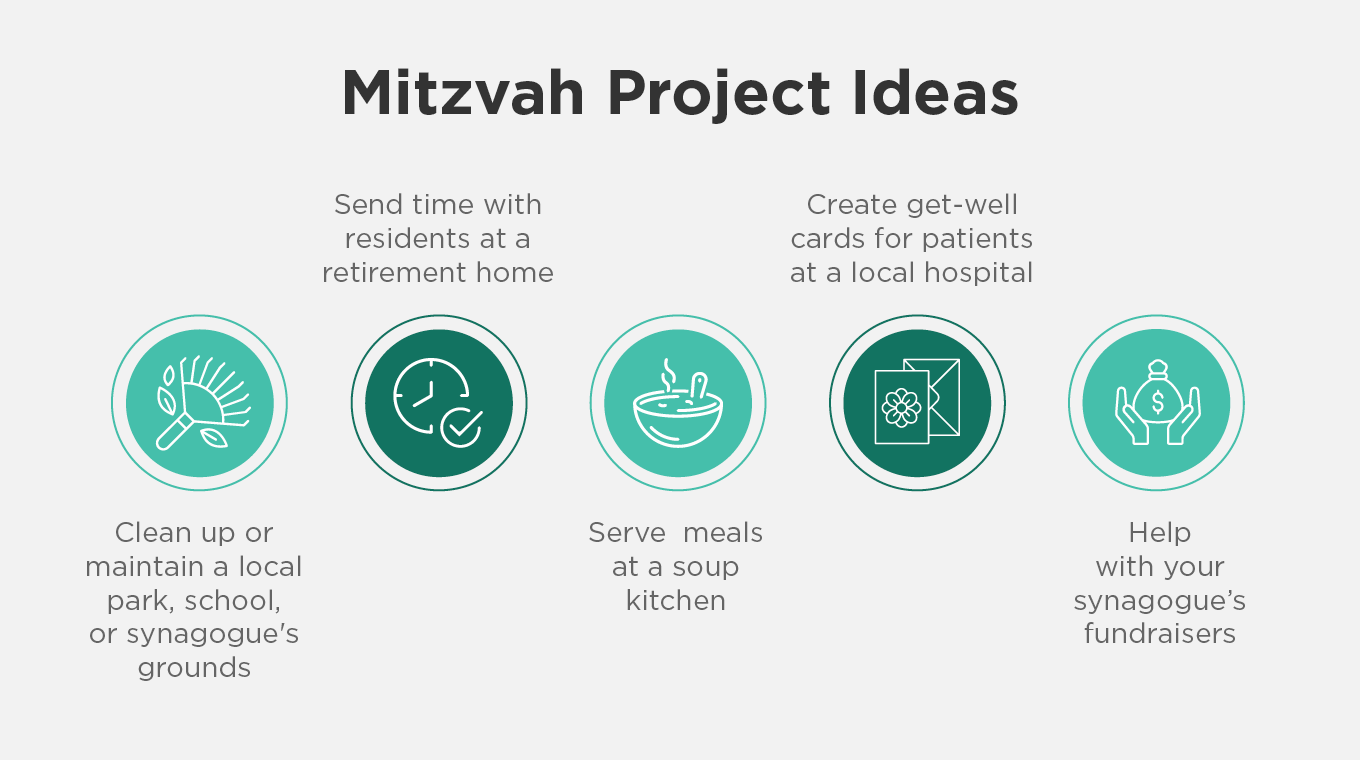
- Helping clean up or maintain a local park, school, or synagogue's grounds
- Spending time with residents at a local retirement home
- Serving meals at a soup kitchen
- Creating get-well cards for patients at a local hospital
- Helping plan or play a significant role in one of their synagogue’s fundraisers
To guide students, some synagogues set project requirements, such as the type of project a student must complete or how many hours they must devote to it. For example, one synagogue might require students to spend at least 20 hours completing a service-related project, whereas another might only require 10 hours but specify that the project must be directly related to their synagogue or Jewish faith.
Ultimately, this step is meant to engage both students and their families. Encourage students to choose a project they are passionate about, helping them grow their independence and discover their personal values. Families should provide support and aim to make the project a learning experience where students reflect on their faith and what the project means in connection to their B’nai Mitzvah.
When done successfully, the Mitzvah project should emphasize to students that their B’nai Mitzvah is not just about their ability to perform the ceremony, but their character and contributions.
Step 4: Hebrew and Prayer Skills Preparation
To set every child up for success, your synagogue should ensure that students continue building Hebrew and liturgical skills even before individual tutoring begins.
In the months between the cohort orientation and one-on-one tutoring, help students reinforce their prayer literacy through either regular religious school or other preparatory classes. A few examples of offered programs include:
- Workshops focused on Siddur skills or Torah cantillation
- Short-term courses, like a springtime Torah trope
Through these programs, students will have a strong foundation that prepares them for their one-on-one tutoring. When they can already read Hebrew prayers and have a basic familiarity with service structure, students will have the confidence to tackle their Torah and Haftarah portions head-on.
Step 5: One-on-One Tutoring and Torah Portion Practice
Individualized tutoring forms the core of B’nai Mitzvah preparation.
Timelines and curriculum vary by synagogue, but students usually begin meeting with a tutor roughly 6-12 months before their ceremony. During these lessons, students will learn their Torah portion, Haftarah, and the specific prayers they will lead.
Ensure these sessions are held consistently, such as on a weekly or biweekly basis, to help build the student’s skills incrementally. During these lessons, tutors will:
- Help students improve their Hebrew
- Teach best practices for performing chants and blessings
- Assign homework, like 15-20 minutes of daily rehearsal practice
- Gauge students’ progress at periodic checkpoints with cantors or B’nai Mitzvah coordinators
Tutoring activities will primarily focus on the student, but parents play a valuable supportive role by scheduling lessons and encouraging their children to practice at home. Plus, as tutoring ramps up at around the half-year mark, families will begin to visualize the service itself.
While students continue tutoring, parents should start planning ceremony logistics, such as booking vendors, securing a reception space, and deciding which relatives will have honors like aliyot or scripture readings. Ask families to assign ceremony roles to family members and start preparing for any activities that will be held at the synagogue, such as Kiddush luncheon plans, about six months ahead.
In short, the tutoring step is about personalized preparation and steady skill development, ensuring the student can lead prayers and chant from the Torah scroll by the time their big day arrives.

Step 6: Service Planning
About five or six months before the ceremony, your synagogue should assign clergy to each B’nai Mitzvah. Once they have been assigned a student, the rabbi should reach out to the family to schedule meetings to help plan the service. These meetings will cover:
D’var Torah preparation
About three or four months before the ceremony, students should have their technical skills down and be ready to move to the spiritual and personal aspects of their B’nai Mitzvah. This involves working on their D’var Torah, the brief sermon or teaching they will deliver about their Torah portion.
Have your synagogue’s rabbi, cantor, or tutor guide the student in crafting the D’var Torah. This involves guiding them to study the Torah portion, discuss its lessons, and articulate what it means to them. For students, this step is a chance to find their voice and connect Jewish teachings to their own lives. From a program perspective, it’s a key milestone that transforms a once-nervous 12- or 13-year-old into a confident member of the Jewish community.
Ceremony details
Schedule meetings for families and the rabbis who will officiate their B’nai Mitzvahs about a month or two in advance. This meeting is an opportunity to review the service outline, confirm family honors, and address any questions.
Parents should also receive guidance on how to prepare any blessings or speeches they may give during the B’nai Mitzvah.
Tutoring progress
Clergy and families should have regular check-ins to make sure students are on track to lead a service by the time of their B’nai Mitzvah. To ensure students are reaching necessary milestones, clergy and parents might review:
- Tutor’s reports
- The student’s D’var Torah progress
- Any rehearsal needs
B’nai Mitzvah tutoring software can help streamline this process by enabling tutors to easily provide regular updates on students’ progress and even create a systemized process for families to submit honors lists.
Essentially, this step is about checking in and coordinating. While students continue to study, their family will work closely with your synagogue leaders to solidify all service components—from liturgical choreography to family honors—well before the big day.
Step 7: Final Rehearsals and The B’nai Mitzvah Ceremony
In the final week or two leading up to the ceremony, all of your preparations will culminate in rehearsals and the ceremony itself. During this time, most synagogues host a full sanctuary rehearsal for the student and any other participants to practice their roles.
This walk-through, usually led by the cantor or rabbi, lets the B’nai Mitzvah student practice on the actual bimah with the Torah scroll, run through the service flow, and iron out any last-minute issues. Along with boosting students’ confidence, this practice ensures everyone knows where to stand, when to speak, and how to use your synagogue’s microphone if applicable.
Around this same time, families will wrap up remaining logistics. If your synagogue is still missing any final materials, such as the honors list or a blurb about the B’nai Mitzvah for your community newsletter, reach out to families to ensure they are submitted on time. For your staff, this is the time to confirm facility details and any parts of the reception your synagogue may be involved in.
During the final few days before the ceremony, your timeline will likely look something like this:
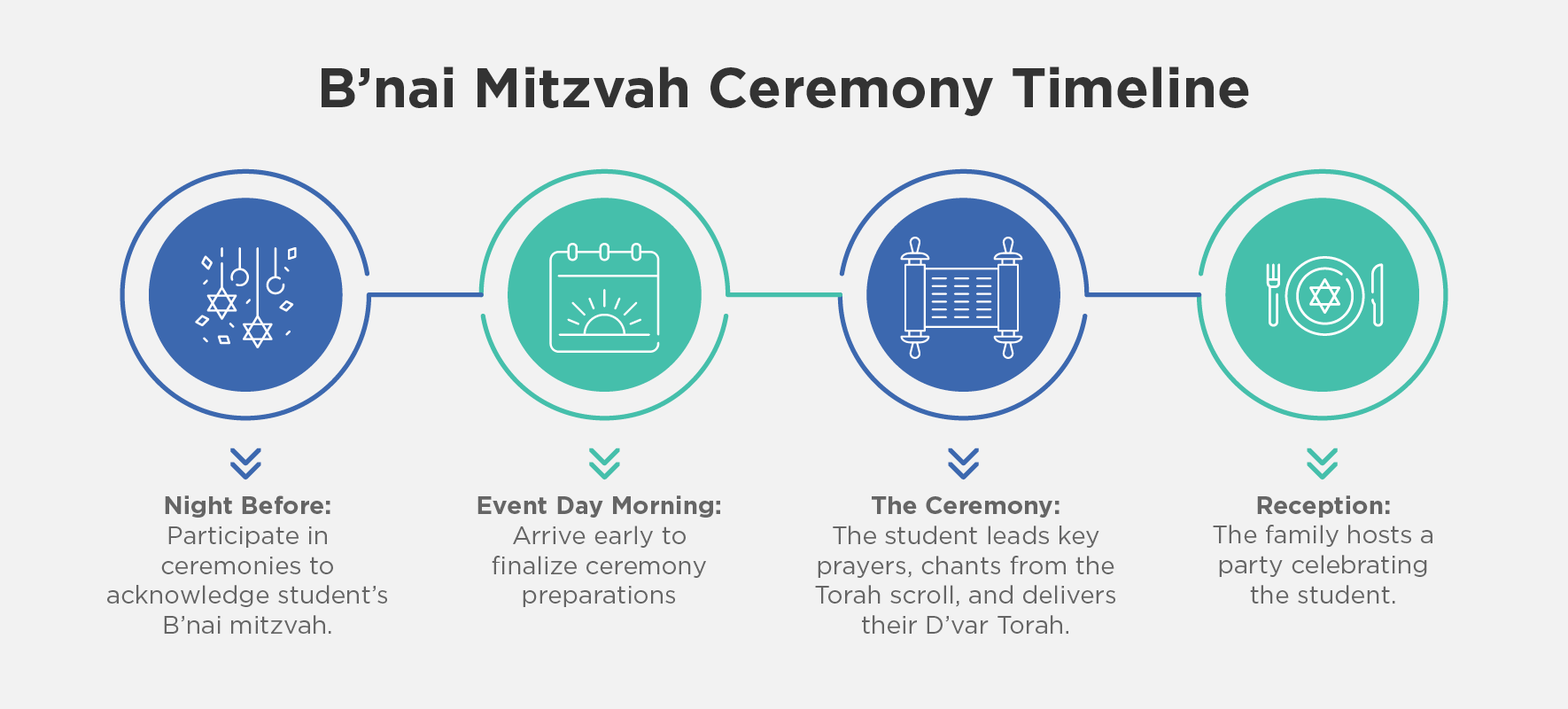
- The night before the B’nai Mitzvah: The family is invited to participate in worship to highlight their transition and allow the community to warmly welcome them.
- Event day morning: Families arrive early to ensure everything is ready. To help families stay organized, consider setting an arrival time for them. Any final preparations or pre-ceremony photos should be taken at this time.
- The B’nai Mitzvah: During the service, the student leads key prayers, chants from the Torah scroll, delivers their D’var Torah, and completes any other practices your synagogue requires. Parents and relatives come up for honors like passing the Torah through the generations, having aliyot, or offering a personal blessing to the child.
- Reception: Following the ceremony, everyone congratulates the student and officially welcomes them as an adult member of their community. From here, the family can conduct their reception party, whether it’s held at your synagogue or another location.
While preparing for a B’nai Mitzvah may be stressful at times, the event itself should be a joyful one as everyone celebrates the student’s hard work and the support they’ve received from their family, tutors, community, and your synagogue’s clergy.
Start Creating Your B’nai Mitzvah Framework
Adapting these seven steps to your synagogue’s specific context will help ensure a well-organized, meaningful B’nai Mitzvah journey for each new cohort. Empowered with this structure (and aided by purpose-built tools to track tasks and dates), B’nai Mitzvah coordinators can confidently guide families from that first spring orientation all the way to the joyous ceremony day.